

Roof Repointing Lewes
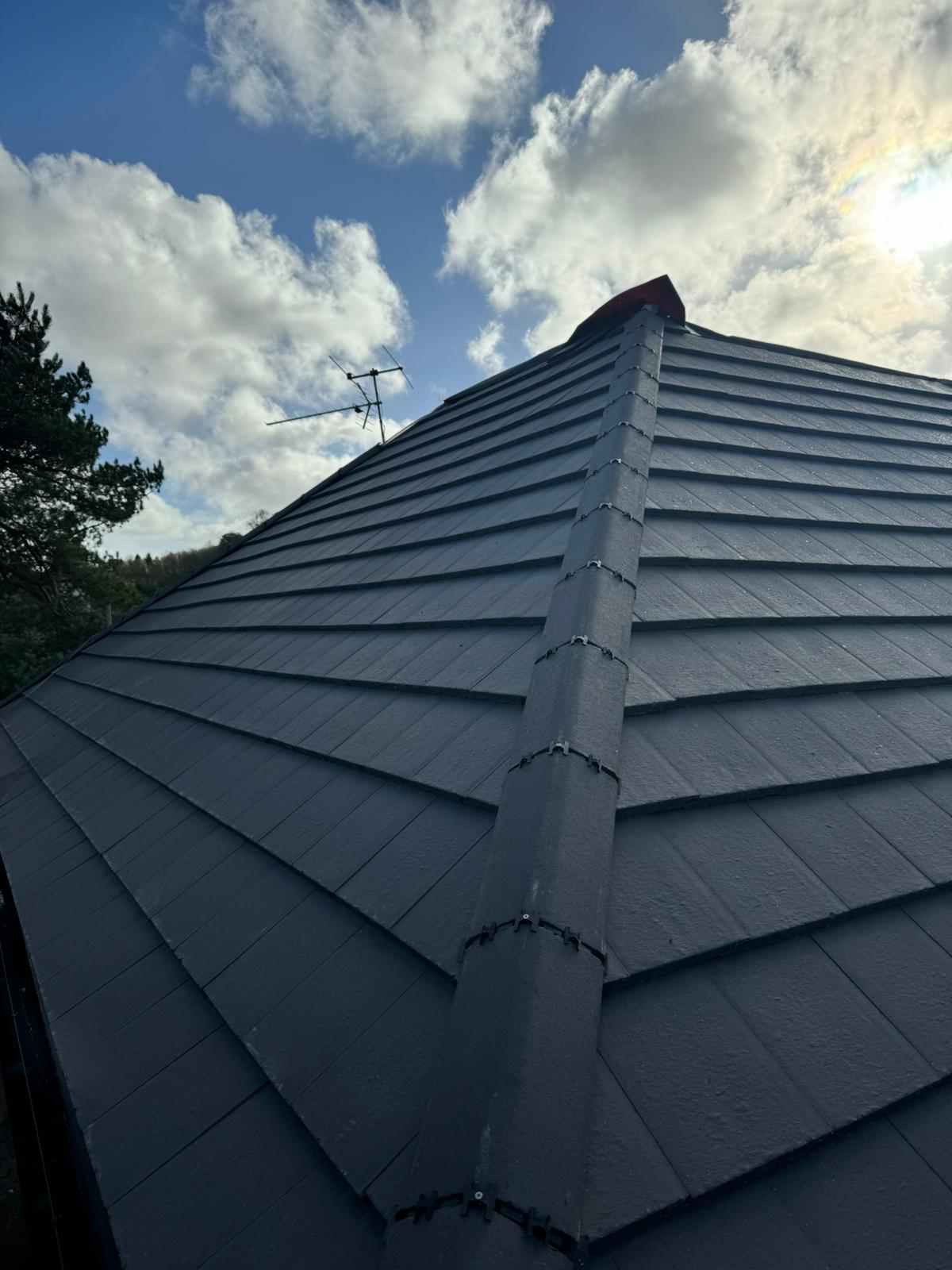
Roof repointing is the renewal of the mortar that seals the working joints of a roof, along the ridge at the top, down the hips, across the verges at the gable edges, and around the chimney where it meets the tiles. Over time that mortar cracks, crumbles and washes out, and once it goes the tiles it was holding begin to loosen and water starts finding its way in. If you have noticed lumps of mortar on the ground below the roof, a ridge line that looks patchy or gapped, or a loose tile at the top or edge of your roof, that is repointing work, and Rated Roofers carry it out across Lewes and the surrounding area.
Lewes is a demanding place to keep mortar sound, which is exactly why this comes up so often here. The town sits high on the chalk in the South Downs, so its roofs take wind-driven rain with little shelter, and its building stock is unusually old and unusually protected, full of flint, brick, mathematical tiles and timber frames within one of the most architecturally rich conservation settings in Sussex. That combination means repointing here is rarely a case of slapping on any bag of mortar. Getting the material and the method right matters more in Lewes than almost anywhere, and the rest of this guide explains why, along with what proper repointing involves and how to tell when your roof needs it.
What roof repointing actually involves
Repointing is not one job but several closely related ones, depending on where the mortar has failed.
- Ridge repointing. The ridge runs along the very top of the roof, and the ridge tiles are traditionally bedded in mortar. This is the most exposed mortar on the whole roof and usually the first to go.
- Hip repointing. The hips are the sloping external angles on a hipped roof, bedded the same way as the ridge and failing for the same reasons.
- Verge repointing. The verges are the mortar-sealed edges at the gable ends, which take high wind loading and crack early.
- Chimney repointing. This covers two things, the mortar joints in the brickwork of the stack itself, which erode and let damp track down inside, and the flaunching, the sloping mortar bed that holds the pots in place.
Done properly, repointing means raking out the old failed mortar cleanly rather than skimming a fresh layer over the top of it, then bedding in a correctly mixed and applied new mortar. A smear of new mortar over crumbling old mortar looks fine for a season and then falls away with it.
Why the mortar fails in the first place
Mortar fails because it is a rigid material sitting on a structure that never stops moving. The roof expands and contracts with heat, the timbers move with moisture, and the whole thing settles gently over decades. The mortar cannot flex with all that movement, so it develops hairline cracks. Water then enters the cracks, freezes in winter, expands and widens them, and the freeze-thaw cycle gradually breaks the mortar apart. Add the wind-driven rain that an exposed downland town like Lewes gets, and the erosion is faster than in a sheltered spot. A mortar mix that was too strong and brittle, or too weak and soft, when it was first laid will fail sooner still.
The signs your roof needs repointing
Most of this is visible from the ground with binoculars on a dry day. Look for gaps, cracks or missing sections along the mortar line at the ridge and gable. Look for fragments of mortar collecting on the path or in the border beneath the roof, which is often the first thing anyone notices. Look for a ridge or edge tile sitting unevenly or slipped out of line, and for green growth rooted in the joints, since moss prises cracks wider every season. Inside, damp patches on upstairs walls near a chimney breast or gable, or daylight along the roof edge in the loft, point the same way.
A failing ridge or verge is also a safety matter, because loose mortar and tiles fall from height onto whatever is below, so it is not something to leave sitting through a windy winter.
The Lewes factor, lime mortar and listed buildings
This is where local knowledge genuinely changes the work. Lewes town lies within the South Downs National Park, which means the South Downs National Park Authority, rather than the district council, is the planning authority for the town. It has a large number of listed buildings and its conservation area covers much of the historic core. On a listed building, even like-for-like repointing can require Listed Building Consent, and within a conservation area your permitted development rights may be restricted.
The material itself is the bigger issue. Many of Lewes’s older buildings were built with soft handmade bricks, flint and lime mortar, and they need to breathe. In our experience, repointing a historic Lewes roof or chimney in a breathable lime mortar works better than using a modern cement mix, because cement is harder and more rigid than the soft brick and flint it sits against, so instead of the mortar taking the movement and weathering as it should, the surrounding historic fabric cracks and spalls, and trapped moisture has nowhere to escape. On these buildings the wrong mortar does not just look wrong, it actively causes damage that is expensive to reverse. This is a recurring theme on the sort of older and period homes Lewes is full of, where sympathetic materials are a requirement rather than a preference. On a modern house, a standard cement-based mix is entirely appropriate and there is no need to overcomplicate it.
Repointing and modern fixing standards
There is one more thing worth knowing. The British Standard covering slating and tiling, BS 5534, was revised so that ridge, hip and verge tiles must now be mechanically fixed rather than held by mortar alone. In practice this means that when a ridge or verge is being re-done, best modern practice is to fix the tiles with screws or clips as well as bedding or capping them, so that even if the mortar later fails the tiles cannot come loose. A roof re-bedded in mortar with no mechanical fixing reflects an older approach, which is a sensible thing to upgrade while the work is being done anyway. This is why ridge pointing done to current standards lasts longer than a simple like-for-like re-bed, and any roofer working to the standards set by bodies such as the NFRC will fix as well as point.
Getting repointing done properly in Lewes
Repointing is one of those jobs where the difference between a good and a poor result is invisible for the first year and obvious by the fifth. The right mortar, raked out properly, mixed correctly and fixed to current standards, lasts decades. The wrong approach fails quickly and, on a historic building, can leave you with more damage than you started with.
Rated Roofers are a family-run firm with over 20 years of experience working on roofs across Sussex, fully insured and vetted through Approved Roofers, the Roofing Register and Checkatrade. On a town like Lewes, matching the mortar to the building and working within its conservation and National Park setting is part of doing the job properly rather than an afterthought. Repointing frequently overlaps with wider chimney repairs and general roof repair, so it is worth having the whole roof edge assessed at once rather than paying for access twice.
If your roof or chimney in Lewes needs repointing, rated roofers will look at it properly and tell you honestly what it needs. Get in touch for a free, no-obligation quote and we will take it from there.

Comment (0)