Do seagulls damage roofs?
5 min readBy Jacob Francis
Yes, seagulls can damage roofs, mostly through nesting rather than simply sitting on them. A nest of twigs, grass and rubbish wedged into a valley, a parapet gutter or behind a chimney blocks the path rainwater takes off the roof, holds damp against the structure, and can send water back under the tiles or over the top of a gutter. Gulls also pick at roofing materials, disturb tiles, and leave droppings that wear on a building over time. On the Sussex coast, where gulls nesting on rooftops are a familiar sight, that makes them a real roofing problem rather than just a noisy one.
The other half of the answer is the law. Gulls and their nests are protected, so you cannot simply clear a nest out during the breeding season, and protecting your roof is not a reason the law accepts for doing so. That makes timing everything. The months between the chicks leaving in late summer and the birds returning in spring are when old nests can be cleared, damage repaired and the roof proofed.
How gulls damage a roof
Two Sussex councils describe the problem in very similar terms. Adur and Worthing Councils say gulls can disturb roof tiles and block gutters, flues, chimneys, drains and ventilation, and that their droppings can increase the erosion of buildings. Hastings Borough Council adds that gulls pick at roofing materials, that nests can hold moisture against the structure, and that nesting material can block gas flues and valley and parapet gutters, which can lead to flooding.
In practice that damage shows up in a few places.
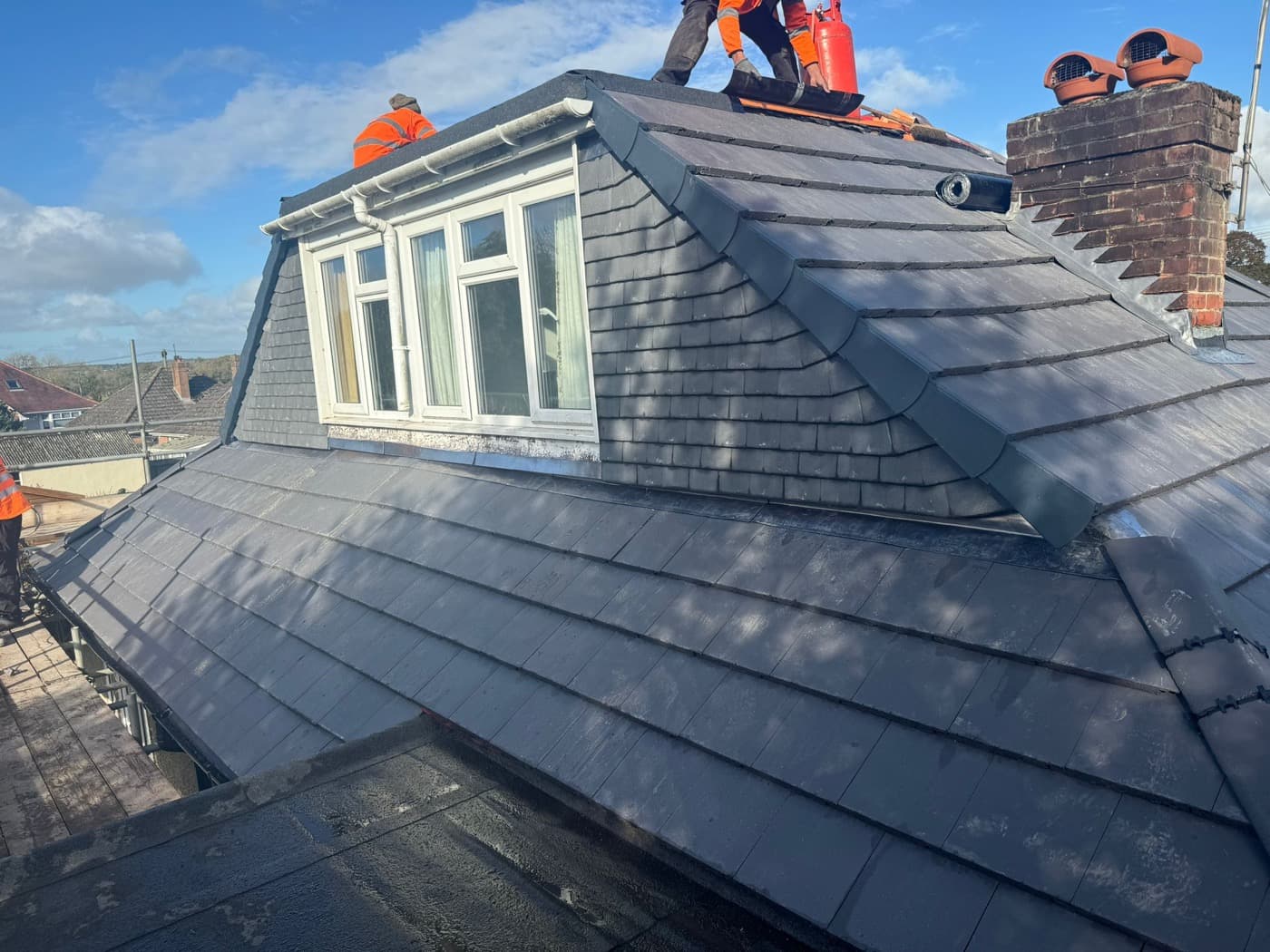
- Valleys and parapet gutters. These are the channels that carry the most water off a roof, and the sheltered corners gulls like to build in. A nest in a roof valley can send water sideways under the tiles in the next heavy rain.
- Gutters and outlets. A gutter full of old nesting material overflows down the wall or backs up under the eaves, which is a common reason gutters overflow even when they look clean from the ground.
- Tiles and ridges. Gulls landing, nesting and tugging at materials can knock tiles and ridge tiles out of place, leaving gaps for the weather.
- Chimneys and flues. A nest on top of or inside a flue is a blockage, and on a flue that still serves a gas appliance that is a safety risk as well as a roofing one. It is a good moment to check whether the stack itself is sound, because a leaning chimney stack is easier to spot once the nest is gone.
- Flat roofs. Large, open and often out of sight, flat roofs over extensions and garages are prime nesting spots, and a blocked outlet leaves water standing on the surface.
What the law says about gull nests
Herring gulls and lesser black-backed gulls are the gulls most of us call seagulls, and they are protected like any other wild bird. GOV.UK is clear that it is an offence to take, damage or destroy the nest of any wild bird while it is in use or being built. Removing eggs or an active nest needs a licence, and Natural England says it cannot grant a licence because a bird is causing damage to property.
Neither species is covered by the general licence for public health and safety in 2026, so anything beyond that point needs an individual licence. Hastings Borough Council puts the practical effect plainly, saying nest or egg removal is not legal if the problem being addressed is noisy gulls or gulls damaging property.
So for a homeowner, the lawful options are to prevent gulls nesting in the first place and to deal with the damage once the nest is no longer in use. Adur and Worthing Councils describe proofing a building so birds cannot roost or nest as probably the most effective control, and say it is strongly recommended to take specialist advice before taking any action.
Why autumn is the time to act
Hastings Borough Council describes the gull year in some detail. Pairs court in April, start building nests from early May, lay from early May onwards, and the chicks fledge in August. By autumn the nests are empty.
That leaves a window from late summer through to early spring when old nests can be cleared out of gutters, valleys and outlets, the damage they have caused can be repaired, and deterrents can be fitted before the birds come back. Leave it until April and you are likely to be stuck with whatever the gulls build for another season.
It also lines up with the work every roof needs before winter anyway. Clearing gutters, checking valleys and outlets and looking over the ridge are all part of a regular roof inspection, and they matter more on the coast. Damp held against a roof by an old nest is one of the less obvious causes of damp from roof problems.
Keeping gulls off your roof
Adur and Worthing Councils say plastic spikes and netting fixed to suitable places should deter gulls from roosting and nesting, but that they need regular maintenance because gulls will take advantage of any faults. Hastings Borough Council says deterrents must be designed and fitted by specialists, and suggests the British Pest Control Association for a list of members able to do the work.
There are things you can do that cost nothing. Adur and Worthing Councils ask people not to feed gulls and to keep household waste secured in bins, because food is what keeps them around in the first place.
Be wary of anyone offering to clear an active nest in the middle of the breeding season. If a nest is active, the safe answer is to leave it, make sure water can still get off the roof, and plan the work for when the birds have gone.
Repairing the damage
Once nesting has finished, a roofer can clear out the old material and put right what it has caused. That usually means clearing gutters, valleys and outlets, refixing or replacing disturbed tiles and ridge tiles, and checking the flashing and the timbers around anywhere water has been held. On a flat roof it means checking the membrane around outlets where water has been standing. Whatever the repair, it is worth doing before the winter rain tests it.
If a blocked valley or gutter has already let water in, a temporary roof repair may be needed to keep the weather out while the permanent work is arranged, and the damage itself is a job for proper roof repairs. Do not go up to clear a nest yourself, and never while gulls are nearby. Nesting gulls defend their young, and a roof is no place to be startled.
Gulls and roofs on the Sussex coast
Gulls are part of life on the coast from Worthing and Brighton to Hove and Eastbourne, and the same salt laden wind that makes coastal roofs work harder makes a blocked gutter or valley more costly when it fails. A roof that sheds water freely and gives gulls nowhere comfortable to build is the best protection there is.
If gulls have been nesting on your roof this year, contact us and we can clear the old nesting material, check the gutters, valleys and flashing, and repair any damage before winter. Rated Roofers has over 25 years in the roofing industry, works right across the areas we cover, and you can also ask for a free quote.
Need this doing
Roof Repairs
Leaks, slipped tiles and storm damage traced and fixed.