Handmade clay peg tiles are small, flat clay roof tiles that hang on the battens by wooden pegs pushed through holes near the top of each tile, rather than by the nibs moulded onto the back of most modern tiles. They are laid in overlapping courses so that every part of the roof is covered by at least two layers of tile. Because each one is made by hand, they vary slightly in shape, colour and camber, which gives older roofs in the south east their soft, uneven look.
If you own a house with a peg tile roof, the tiles themselves are usually the toughest part of it. The pegs, the battens and the nails tend to give out first, and that is what decides whether a roof can be repaired or needs relaying. Knowing how peg tiles work, what pitch they need and how they should be repaired helps you judge any quote, and on a listed building it matters even more.
Peg tiles and nibbed tiles
The difference is in how the tile hangs. SPAB, the Society for the Protection of Ancient Buildings, explains that earlier handmade tiles were hung not by protruding nibs but by wooden pegs, while the mass produced tiles made from Victorian times onwards are uniform. A nibbed tile has small lugs on its back that hook over the batten. A peg tile has two holes near its head, and a peg, traditionally oak, goes through the hole and rests on the batten behind.
Both are plain tiles, the flat rectangular tiles laid with a double lap, as opposed to the larger interlocking tiles on many modern roofs. Many peg tile roofs have also been nailed at some point, and The Building Conservation Directory notes that nibs or oak pegs let tiles keep hanging on the batten even if the fixing nail has corroded. The difference between slate and tile roofing is a separate question, but peg tiles sit firmly on the traditional side of it.
Sizes, weight and the pitch they need
Peg tiles were never one standard size. SPAB records sizes ranging from 229 by 152mm in Kent to 305 by 203mm in York. That is one reason matching old tiles on a repair can be difficult.
Modern handmade peg tiles are still made. Keymer, which describes its tiles as made from Wealden clay, publishes the figures below for its Kent Peg tile.
| Kent Peg tile | |
|---|---|
| Size | 250 x 150mm |
| Minimum roof pitch | 40° |
| Headlap | 60mm |
| Batten gauge | 95mm |
| Tiles per square metre | 70.2 |
| Weight as laid | 84.3kg per square metre |
| Fixing | Oak or aluminium pegs |
The figures come from Keymer's technical data sheet for the Kent Peg tile, dated January 2026. Other peg tiles and other makers differ, so check the sheet for the tile on your roof.
Two of those figures matter most. The steep minimum pitch means peg tiles suit traditional steep roofs, not a shallow extension roof, where they would let water in. And at more than 70 tiles to every square metre, each one hung by hand, a peg tile roof takes far longer to lay than a modern interlocking tile roof, which is part of why it costs more.
Where you find peg tiles in Sussex
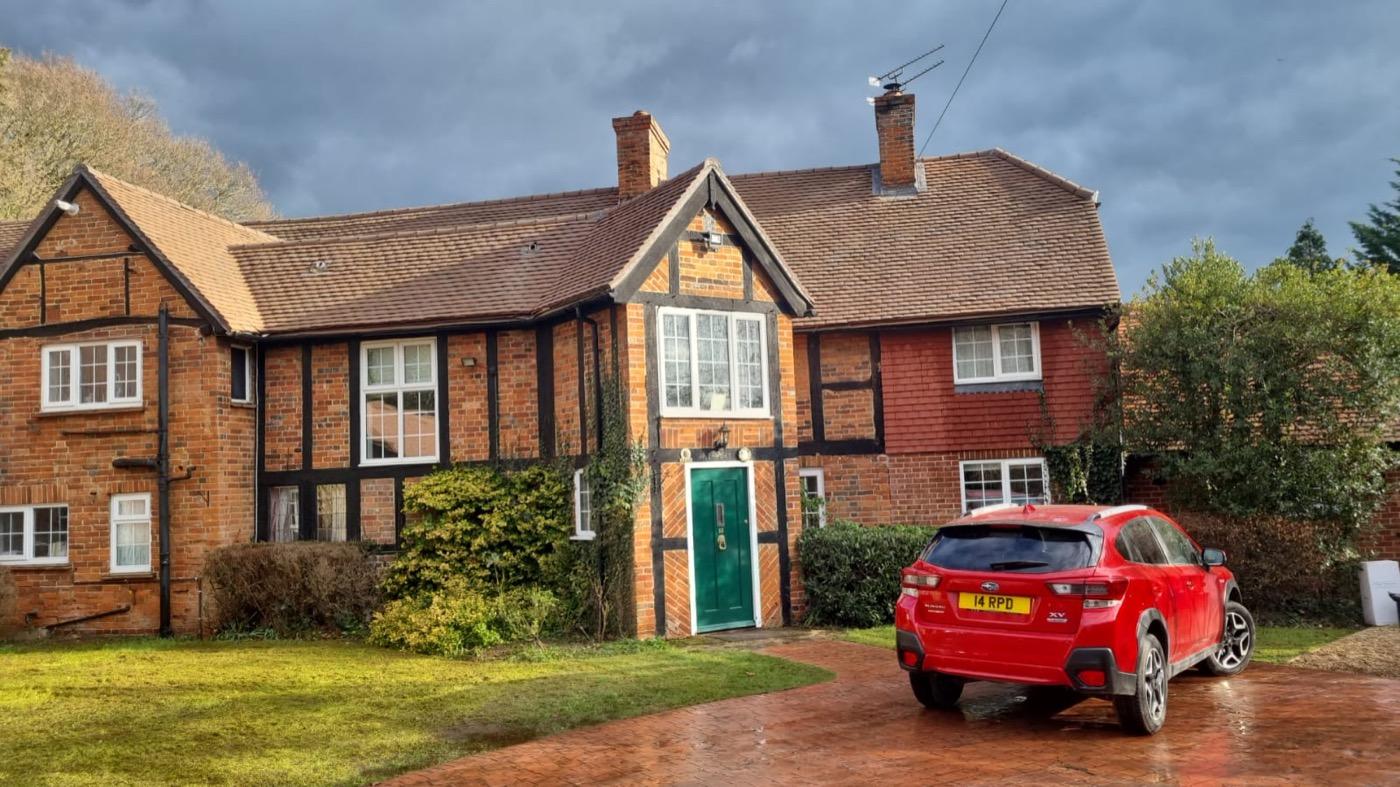
Clay tiles and peg tiles belong to the older building stock across the county. In Arundel, many roofs are older than the people living under them, built in natural slate, clay tile, lead and flint rather than modern materials. In Lewes, with its large number of listed buildings and a conservation area across much of its historic core, traditional clay roofs are part of what the town looks like.
If you are not sure what is on your roof, a roofer can tell you from a close look, and the age of the house is a good first clue.
Why peg tile roofs fail
SPAB is clear that the fixings and the timbers supporting them usually deteriorate before the tiles. Corroding nails can let tiles slip or crack, battens or pegs can decay through insect or fungal attack, and frost, wind lift and decaying torching, the lime mortar sometimes pointed up between the tiles and battens from inside, all add to it. The Building Conservation Directory adds that oak will eventually decay.
The warning sign to know is the one The Building Conservation Directory calls the first sign that a clay tile roof is nearing the end of its useful life, whole rows of tiles slipping because the batten nails have corroded. At that point, it says, only a complete re-roof should be considered, because an effective, lasting repair will not otherwise be possible. A single slipped tile is a repair; rows slipping across the roof is a relay. Knowing the signs your roof needs repairing, and how often roof tiles should be replaced, helps you tell which you are looking at.
Repairing and relaying a peg tile roof
SPAB's advice is to consider retiling when repairs are no longer cost effective, and when re-covering, to reuse the maximum number of old tiles. New tiles should usually match the existing ones in type, colour, texture, size and thickness. It says substituting concrete tiles is undesirable, and that bedding mortar for handmade tiles should normally be lime based, without cement.
Be realistic about how many old tiles will come back. The Building Conservation Directory warns not to expect to save more than 50 per cent in most cases, even when the tiles look sound. New handmade tiles should be chosen by comparing samples against the old roof, so the two sit well together.
Two more points from SPAB are worth knowing before you agree a specification. It advises avoiding second hand plain tiles taken from other buildings, which is a different view from the common practice of buying in reclaimed tiles. And where modern sawn battens or an underlay are used in place of traditional riven laths and torching, it says additional ventilation may be needed, to prevent condensation and the timber decay it causes. Whether a roof is suffering condensation or a roof leak matters on an old roof as much as a new one.
Listed buildings and conservation areas
On a listed building, even like for like repairs to a roof can need listed building consent, and inside a conservation area permitted development rights may be restricted. Changing the covering, swapping clay for concrete, or moving from pegs to a different fixing are exactly the kinds of change a conservation officer will want to know about first. The general rules on planning permission for roof work apply alongside, and older homes bring their own common roofing problems that a re-roof often uncovers.
Getting a clay tile roof looked at
Handmade clay peg tiles are a traditional roof covering hung on pegs, laid on steep roofs and still made today. The tiles often outlast everything holding them up, so the condition of the pegs, battens and nails decides whether a roof needs repairing or relaying, and on an older or listed house the right materials matter as much as the work.
We supply and fit traditional clay tiles as well as modern ones as part of our tiled roofs work. If your clay tiled roof is slipping, leaking or due for attention anywhere in the areas we cover, contact us and we can inspect it and tell you whether it needs a repair or relaying. Rated Roofers has over 25 years in the roofing industry, and you can also ask for a free quote.