What is the difference between Code 4 and Code 5 lead?
5 min readBy Jacob Francis
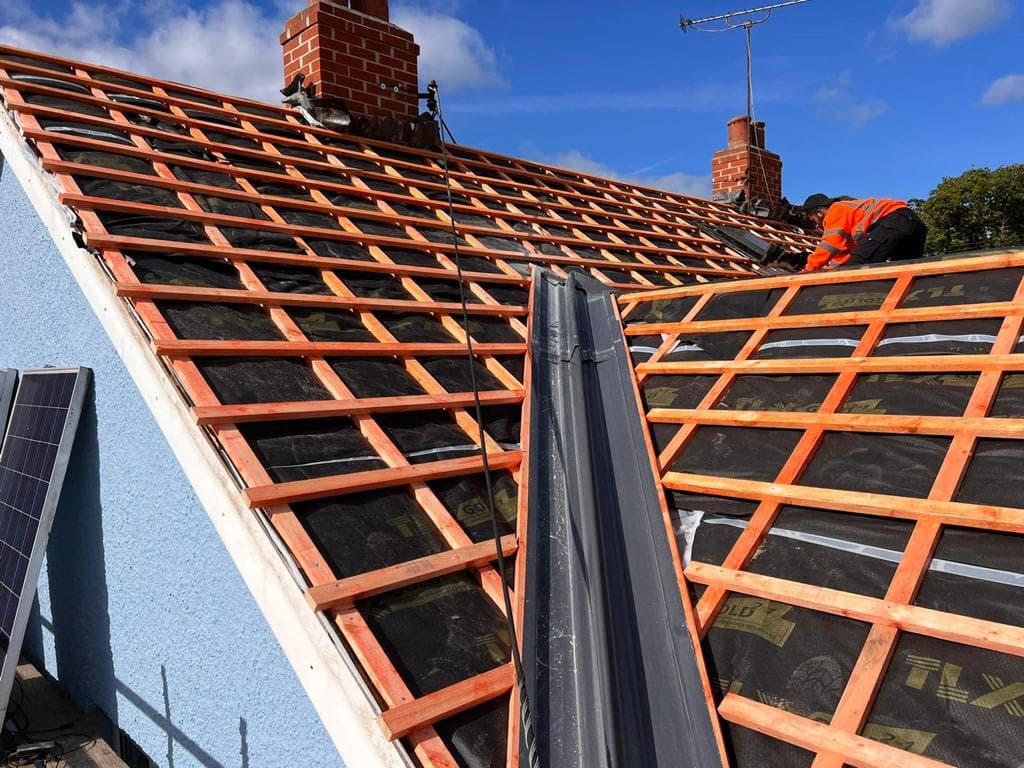
The difference between Code 4 and Code 5 lead is thickness. Code 4 lead sheet is 1.80mm thick and Code 5 is 2.24mm, so Code 5 is about a quarter thicker and, being the same material, about a quarter heavier for the same area. Code 4 is the everyday choice for flashings, the strips of lead that seal the joints around chimneys, walls and abutments. Code 5 goes where lead has more work to do, such as gutters, valleys, dormers and lead covered roofs.
For a homeowner the code matters mainly when it appears on a quote. Knowing what each one is normally used for tells you whether the lead specified suits the job, whether a thicker code is worth the extra, and whether something has been specified lighter than it should be. The code is not a quality grade. It is a thickness, and the right one depends on where the lead is going.
What the lead code number means
Lead sheet for building is sold by code number, and each code stands for a thickness. Midland Lead, a UK manufacturer, lists codes 1 to 8, running from 0.44mm at Code 1 to 3.55mm at Code 8. Rolled lead sheet is made to the British and European standard BS EN 12588, which is the standard the Lead Sheet Training Academy's rolled lead manual is written to.
The four codes a domestic roofer works with most often are 3 to 6. Here are their thicknesses and the jobs Midland Lead lists each one for.
| Thickness | Listed for | |
|---|---|---|
| Code 3 | 1.32mm | Soakers |
| Code 4 | 1.80mm | Soakers, chimney flashings, apron and cover flashings, hip and ridge flashings, pitched valley gutters, vertical cladding |
| Code 5 | 2.24mm | Chimney, apron, cover, hip and ridge flashings, pitched valleys, parapet and box gutters, dormers, flat and pitched lead roofing, vertical cladding |
| Code 6 | 2.65mm | Chimney, apron, cover, hip and ridge flashings, pitched valleys, parapet and box gutters, dormers, flat and pitched lead roofing, vertical cladding |
The thicknesses and uses in the table come from Midland Lead's guidance on which thickness a project needs. The manufacturer also says the construction industry typically requires Code 4, with a smaller requirement for Code 5, which matches what you see on most houses. Their guidance was published in 2016, and the code thicknesses are fixed by the standard, so it still holds.
Where Code 4 lead is used
Code 4 is the workhorse of domestic leadwork. It is the usual choice for the step and cover flashings where a pitched roof meets a wall or a chimney, the apron flashing across the front of a chimney stack, and many soakers, the small pieces of lead slipped under the tiles at an abutment. On most houses, the lead flashing you can see from the street is usually Code 4.
It is the thickness the trade reaches for first in the narrow strips flashings need, and whatever the code, how often lead flashing should be checked or replaced depends on its age and how well it was fitted.
Where Code 5 lead earns its place
Code 5 is used where the lead carries water, takes more wear or covers a larger area.
- Gutters. Midland Lead lists parapet, box and tapered valley gutters as a job for Code 5 and above, never Code 4. These are channels that carry a lot of water.
- Valleys. Pitched valleys, the internal angles where two roof slopes meet, can be Code 4 or Code 5. A roof valley collects water from both slopes, and Midland Lead lists Code 4 to Code 7 for them, so the choice depends on the valley.
- Dormers and lead roofs. Dormers, and flat or pitched roofs covered in lead, are listed for Code 5 and heavier.
- Exposed positions. Both codes are listed for chimney flashings, and a roofer may choose Code 5 for a stack in a very exposed spot.
That last point matters on this stretch of coast. Arundel and the towns along the Arun catch salt laden wind and driving rain from the Channel, the kind of weather that works at fixings and lifts anything not well secured. Thicker lead is no substitute for good fixing, but on an exposed chimney or a long valley it is a reasonable choice.
Code 4 or Code 5 for chimney flashing?
Both are within the range Midland Lead lists for chimney flashing, which runs from Code 4 to Code 6, so either can be right. For an ordinary chimney on an ordinary house, Code 4 is normal and does the job. Code 5 is a reasonable step up for a large stack or an exposed position. The flashing is only one part of a sound chimney, and problems with the stack itself, from the pointing to a leaning chimney stack, need sorting at the same time as the lead. Our chimney repairs cover the leadwork and the stack together.
What to check on a quote
When a roofer quotes for leadwork, the quote should say which code they will use. A few things are worth checking.
- The code suits the job. Code 4 for flashings, Code 5 or heavier for gutters and lead roofs. Code 3 has its place for soakers, but Midland Lead does not list it for chimney or cover flashings, so Code 3 on a chimney flashing is lighter than the usual range.
- You are not paying for weight you do not need. A thicker code costs more because there is more lead in every metre. Code 5 on a short step flashing in a sheltered spot is unlikely to earn its extra cost, so ask why it has been chosen.
- Like for like on a repair. Replacing a section of lead with a lighter code than the rest is worth questioning.
- Listed and older buildings. On a listed building, and Lewes has a great many, even like for like repairs can need consent, and the council's conservation officer may have views on the lead as well as the mortar.
A price far below the others for the same leadwork can be where a lighter code or a shortcut in the fixing hides. That is one reason a cheap roofing quote can be a red flag, and why it pays to know what to look out for when choosing a roofer.
Why the fixing matters as much as the code
The thickest lead in the world will still let water in if it is badly fitted. Lead expands and contracts with temperature, so it has to be laid in sensible lengths with proper joints and fixings, chased into the brickwork and pointed, and dressed closely to the tiles. Where it is not, it splits, lifts or pulls out of the wall, the same faults that cause so many bay window roofs to leak. Leadwork is a skilled trade, and the Lead Sheet Training Academy, a CITB approved training organisation, trains roofers to do it to the standard.
So the right question is not only which code, but how it will be fixed. A good roofer will tell you both.
Getting leadwork checked or replaced
Code 4 and Code 5 lead are the same material in two thicknesses. Code 4 is the standard for most flashings on a house, and Code 5 is for gutters, valleys, dormers, lead roofs and the more exposed jobs. The code on your quote should match where the lead is going, and the fixing matters as much as the thickness.
If your flashing has lifted, split or started letting water in anywhere in the areas we cover, contact us and we can inspect it and carry out the roof repairs it needs. Rated Roofers has over 25 years in the roofing industry, and you can also ask for a free quote.